D&D.Sci Alchemy: Archmage Anachronos and the Supply Chain Issues
This is an entry in the ‘Dungeons & Data Science’ series, a set of puzzles where players are given a dataset to analyze and an objective to pursue using information from that dataset.
After talking with abstractapplic, I’ve stolen the June 7th scenario slot from him. I hope that this scenario should be relatively simple: not as easy as abstractapplic’s recent introductory scenario, but I still think this would be a fairly approachable starting point if you’re new to D&D.Sci.
STORY
Archmage Anachronos stares at you from beneath his bushy eyebrows. “I have called you to beseech your aid as the greatest living practitioner of the Ancient and Forbidden Art of...Data Science.”
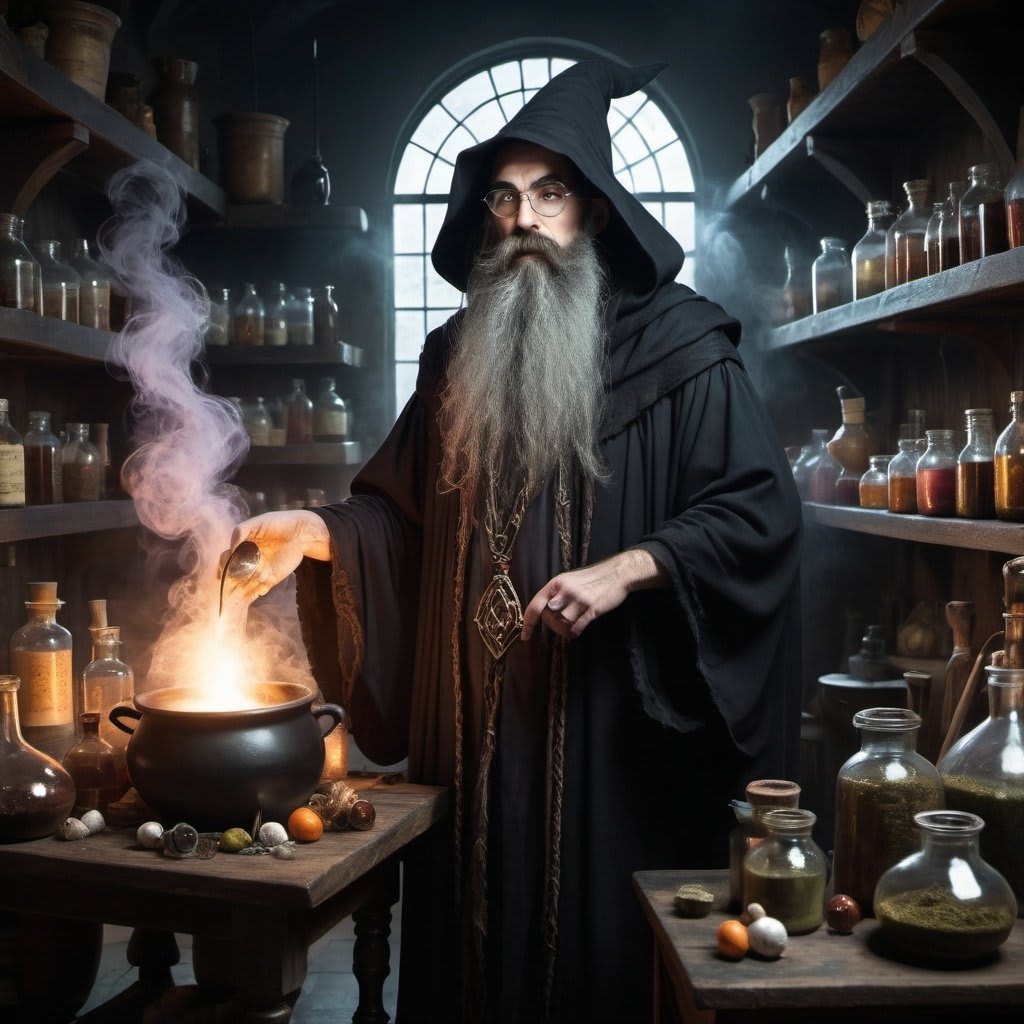
(You’ve tried many times to explain to Archmage Anachronos that Data Science is neither Ancient nor Forbidden, and in fact that the Calantha Institute of Technology and Thaumaturgy has regular classes in Data Science that he could just attend. It hasn’t seemed to work. Ever since you used Data Science to help him locate the lair of the Loathsome Lich, he’s decided that it must be a mighty power indeed, and that you must be a great wizard of some sort to be able to use it. Or maybe he just enjoys being dramatic.)
You wait to hear what the problem is. Is the world being swallowed by darkness? Have the Elemental Lords reawoken and begun subjugating nations? What dread occasion has led him to seek the aid of one who wields so perilous an art[1]?
He tells you that he needs your help brewing some Barkskin Potion.
(One side effect of Archmage Anachronos’s personality—a love of ridiculous drama, a penchant for overcomplicated schemes, and a strong tendency to frequently disappear to conduct secretive ‘archmage business’ - is that it is hard to tell whether this is actually as unimportant a matter as it sounds, or whether there is some vitally important objective he needs this potion for.)
With his great experience in alchemy (he proudly informs you), he brews a successful potion more than half the time, and remembers every potion he’s ever tried to make. (He presents you with some recently-written records of his brewing, the ink still wet). But he doesn’t always succeed in making a successful potion, or in making the type of potion he was hoping to get.
Additionally, he’s encountered some difficulties sourcing his inputs. Adventuring turned out to be a low-interest-rate phenomenon, and now that famous funders like Rakshasa Global Management, World Tree Capital and Andreesen Heroics have stopped pouring speculative investment into low-level adventurers, it’s much harder for him to get his hands on various alchemically-interesting dragon parts[2].
In fact, he’s run entirely out of about half of his ingredients, and is low on the rest. And he’s got an urgent need for a cauldron of Barkskin Potion, and only enough time and remaining ingredients to do one brew. He’s turned to you for advice: what ingredients should he include to have the best odds of brewing this Barkskin Potion?
DATA & OBJECTIVES
Archmage Anachronos tells you he is trying to brew Barkskin Potion.
Some of his ingredients are not available—he has no access to:
Angel Feather
Beholder Eye
Crushed Ruby
Crushed Sapphire
Dragon Scale
Dragon Spleen
Dragon Tongue
Dragon’s Blood
Ectoplasm
Eye of Newt
Faerie Tears
Powdered Silver
But he does have access to:
Badger Skull
Beech Bark
Crushed Diamond
Crushed Onyx
Demon Claw
Giant’s Toe
Ground Bone
Oaken Twigs
Quicksilver
Redwood Sap
Troll Blood
Vampire Fang
He’s asked you which of these ingredients he should use to maximize his odds of brewing a Barkskin Potion successfully.
He can use any number of different ingredients in a potion, but cannot use any ingredient more than once: first, this would apparently “trigger a harmonic overload” and ruin the potion, and second, he only has one of most of these things.
So you could tell him to use Badger Skull and Beech Bark.
Or you could tell him to use Crushed Diamond, Crushed Onyx, a Demon Claw, and a Giant’s Toe.
Or you could tell him to use all of the available ingredients except for the Vampire Fang.
But you could not tell him to use two Troll Blood, or three Redwood Sap.
To help you with this, you have a dataset of past potions he’s attempted to brew. Each row lists which ingredients he included in the potion, and what the result was (either what potion was successfully brewed, or what went wrong.)
I’ll aim to post the ruleset and results on June 17th (giving one week and both weekends for players). If you find yourself wanting extra time, or find this scenario late and want a chance to attempt it yourself, comment below and I can push this deadline back.
As usual, working together is allowed, but for the sake of anyone who wants to work alone, please spoiler parts of your answers that contain information or questions about the dataset. To spoiler answers on a PC, type a ‘>’ followed by a ‘!’ at the start of a line to open a spoiler block—to spoiler answers on mobile, type a ‘:::spoiler’ at the start of a line and then a ‘:::’ at the end to spoiler the line.
I’m very proud of this scenario. (Even if you’re confident you aren’t going to play it, I think you could read the wrapup doc and in particular the section on ‘Bonus Objective’ so you can see what it involved).
It accomplished a few things I think are generally good in these scenarios:
There was underlying structure that players could uncover, which created emergent complexity in the output but made sense with the theme once the underlying ruleset was revealed/discovered.
Human thought about e.g. the theme and what patterns would be reasonable to observe was valuable, the puzzle was not optimally-solved just by feeding the data into a model and calling it a day.
Multiple levels of solution were possible, from a decent solution with little effort up to a more-involved solution that went further and dug into the underlying structure.
And also it managed to trick many players with a surprising-yet-thematic twist :P
I continue to think that this is plausibly the best ever installment of that genre I invented, and I continue to think it expands said genre in interesting ways. I also continue to think said genre is a valuable addition to LW, because it provides (limitedly) messy and (tolerably) complicated inferential problems with definitive answers; in other words, it gives us a chance to fail and know we failed.
(This challenge successfully fooled me, and I love it for that. Maybe you’ll do better, dear reader?)